
Tesla Revives Dojo3: The Push Toward Space-Based AI Compute
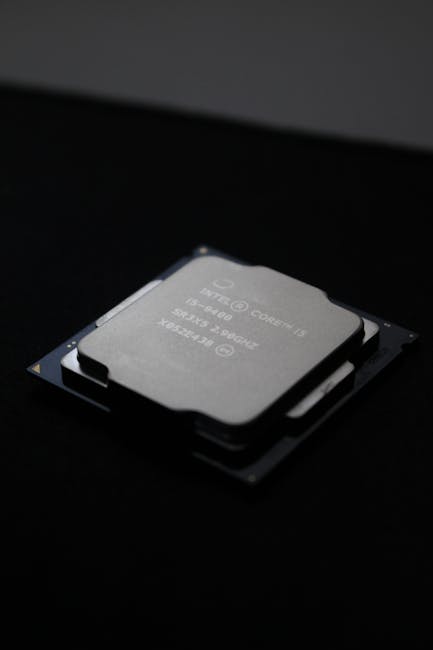
Tesla has signaled a renewed effort to develop Dojo3, its next-generation AI chip platform, but with a dramatic pivot: instead of focusing solely on terrestrial model training for self-driving, the project is being repositioned around space-based AI compute. The announcement reframes Dojo3 as a moonshot to run high-performance AI workloads off-planet—potentially in orbit—where constant solar power and reduced reliance on strained terrestrial grids could enable new classes of large-scale model training and inference.
What is space-based AI compute and why would Tesla build Dojo3 for orbit?
At its simplest, “space-based AI compute” refers to placing data-center-class compute infrastructure in space—typically low Earth orbit (LEO) or higher—or on platforms that enjoy near-constant sunlight, allowing solar generation to power energy-hungry accelerators with fewer terrestrial constraints. Tesla’s rationale for repurposing Dojo3 for this concept rests on three strategic ideas:
- Energy availability: orbital platforms can harvest solar energy almost continuously, avoiding grid limitations on Earth for peak compute demand.
- Scaling compute without local constraints: offloading large-scale training to a dedicated orbital fleet could reduce local data center expansion and energy footprint on-premises.
- Vertical integration advantage: Tesla controls launch capabilities and has an interest in integrated hardware-software stacks for vehicles, robotics, and now potentially orbital compute.
Framed as such, Dojo3 becomes a specialized chip and systems strategy to enable “satellite AI compute constellations” that can host training runs, large-batch inference services, or specialized workloads that benefit from constant solar power and high isolation.
How realistic is the idea of orbital AI data centers?
The concept stretches engineering boundaries but isn’t purely science fiction. Several major technical and commercial obstacles must be addressed before space-based AI compute becomes practical at scale. Below are the primary challenges and plausible mitigation strategies.
Key technical challenges
- Thermal management: High-power accelerators generate a lot of heat. In vacuum, convection is unavailable; thermal design must rely on conduction to radiators and thoughtful system-level heat rejection.
- Radiation hardening: Electronics in orbit face increased cosmic rays and solar particle events. Chips and system components require shielding, ECC memory, and architecture-level fault tolerance.
- Power and energy storage: Continuous solar exposure is ideal, but orbital night cycles, eclipses, and payload orientation require robust batteries and power-management systems.
- Launch costs and payload constraints: Mass, volume, and shock tolerance are constrained by launch vehicles; chip designs and packaging must be optimized for space readiness.
- Data transfer and latency: Moving petabytes of training data to and from orbit is nontrivial—high-throughput downlinks, edge preprocessing, federated learning, or onboard dataset curation will be necessary.
- Maintenance and upgradeability: On-orbit servicing remains expensive and limited. Architectures must be fault tolerant, remotely upgradable, and designed for long operational lifetimes.
Possible engineering mitigations
- Design chips and boards with integrated thermal interfaces to deploy large radiator surfaces that reject heat via radiation.
- Use radiation-tolerant packaging, error-correcting memory, and redundancy across compute nodes to minimize single-event upsets.
- Implement hierarchical training workflows where only model checkpoints or distilled datasets are transferred to orbit, reducing bandwidth needs.
- Pair orbital compute with on-ground preprocessing farms to compress, filter, and stage training datasets efficiently.
- Adopt modular satellite platforms that support hot-swap compute modules, enabling partial servicing or replacement through future on-orbit servicing missions.
How would Dojo3 differ from Tesla’s earlier AI chips?
Tesla’s recent chip roadmap includes designs like AI5 and AI6 intended for automotive autonomy and humanoid robotics. Dojo3 (sometimes referred to as AI7 within internal roadmaps) reframes the target environment: rather than optimizing purely for vehicle-integrated inference or on-premise data-center training, Dojo3 would prioritize:
- Power-to-performance efficiency per watt in a radiation-hardened envelope.
- Thermal interfaces compatible with radiator-based heat rejection systems.
- High reliability and graceful degradation modes for long-duration missions.
- Modular compute tiles that can be scaled across a constellation.
These design pivots imply trade-offs compared with TSMC-fabricated AI5 chips built primarily for terrestrial vehicle inference and data-center training. A space-optimized Dojo3 may focus on packaging, shielding, and system-level integration rather than solely on peak FLOPS per watt.
What are realistic near-term use cases for orbital AI compute?
Even before full-scale training fleets are established, space-based compute can unlock narrower but valuable capabilities:
- Onboard satellite inference for real-time Earth observation analytics, reducing downlink bandwidth by sending only insights.
- Federated learning hubs that aggregate and refine models from distributed edge fleets (vehicles, robots, sensors) with periodic synchronization.
- Specialized training runs for models that tolerate higher latency but benefit from uninterrupted solar power and isolated compute environments.
- High-value scientific simulations or physics workloads that require bursts of compute unconstrained by regional grid limits.
What are the business and regulatory implications?
Moving AI compute to orbit intersects with complex commercial, legal, and environmental considerations. Key items to monitor:
- Cost dynamics: Launch and platform costs must be amortized across meaningful compute output to be competitive with terrestrial hyperscalers.
- Spectrum and communications: High-throughput satellite links must be coordinated with regulators and can face licensing constraints in different countries.
- Space debris and environmental impact: Increasing on-orbit hardware intensifies concerns about congestion and long-term sustainability of orbital slots.
- National security and export controls: High-performance compute in orbit could trigger export control scrutiny or geopolitical restrictions.
These considerations mean that any company pursuing orbital compute must engage with regulators, invest in debris mitigation strategies, and craft a cost model that factors in long-term operational and legal overhead.
Which industries could benefit most from orbital AI compute?
Beyond Tesla’s own ambitions, several sectors could find strategic value in orbital compute capabilities:
- Automotive and robotics: Continuous model training using aggregated telemetry could accelerate autonomy development.
- Earth observation & agriculture: Real-time analytics for disaster response, crop monitoring, and climate science can be enhanced by onboard processing.
- Defense & intelligence: Secure, redundant compute in orbit supports time-sensitive analytics and reduces dependence on ground infrastructure.
- Scientific research: Simulations that require extended compute windows can exploit continuous solar energy availability.
How does this fit into broader AI infrastructure trends?
The Dojo3 space-based compute idea aligns with accelerating trends in AI infrastructure: companies are pursuing hardware specialization, supply-chain diversification, and creative approaches to scaling compute capacity. For context on AI infrastructure strategies and the larger market forces shaping these choices, see our coverage of meta-scale compute and hardware investments in the industry: Meta Compute: Scaling AI Infrastructure for the Future and analysis of how AI investments are reshaping the startup ecosystem in Nvidia AI Investments: Shaping the AI Startup Ecosystem.
Additionally, building interoperable agent architectures and standards will be critical if orbital compute is meant to serve distributed fleets of AI agents. For perspectives on agent standards and secure integrations, see Agentic AI Standards: Building Interoperable AI Agents.
Can the space-based approach solve Earth’s data center energy problem?
It is tempting to view orbital compute as a direct remedy for the energy constraints facing terrestrial data centers. In practice, orbital solutions complement rather than replace ground-based infrastructure. Advantages like near-constant solar generation and geographic isolation are balanced against high launch costs, limited servicing, and communications bottlenecks. For certain high-value, high-energy workloads, orbital compute could be cost-effective; for the long tail of everyday inference and online services, terrestrial efficiency and edge distribution will remain dominant.
Roadmap: What would it take for Dojo3 to reach orbit-ready scale?
A plausible multi-year roadmap for an orbital Dojo3 program would include:
- Refine chip architecture with space-resilience constraints in mind (radiation tolerance, packaging, thermal interfaces).
- Build and test prototype modules in relevant environments (thermal-vacuum testing, radiation simulation).
- Demonstrate short-duration orbital demonstrations to validate power, thermal management, and data pipelines.
- Scale through modular satellite constellations and invest in high-throughput ground-space networking.
- Operationalize maintenance strategies, on-orbit upgrades, and lifecycle management.
Is Tesla uniquely positioned to make this work?
Tesla’s vertical integration—spanning custom silicon, software stacks, robotics initiatives, and access to launch capabilities through associated space ventures—gives it certain advantages compared to traditional hyperscalers. That said, success also depends on mastering aerospace-grade engineering disciplines, regulatory navigation, and novel systems integration. If Tesla can combine its chip design know-how with robust space-systems engineering, Dojo3 could become a distinctive differentiation in AI infrastructure.
Risks and potential failure modes
- Underestimating thermal and radiation challenges could reduce system lifespan or increase failure rates.
- High per-gigaflop costs compared to terrestrial alternatives could limit commercial viability.
- Regulatory or geopolitical pushback might restrict the ability to operate or sell services globally.
What to watch next
Key signals that will reveal momentum behind Dojo3 as a space-based AI compute play include:
- Public hiring and team rebuilding focused on space-hardened compute and systems engineering.
- Partnerships for launch capacity, satellite buses, and high-throughput space communication links.
- Prototype or demonstrator missions validating thermal control, power management, and data pipelines in orbit.
Conclusion: Ambition meets engineering reality
Tesla’s shift to position Dojo3 as a project for space-based AI compute represents a striking example of ambition in AI infrastructure: it marries aggressive hardware development with an appetite for systems-level risk. The idea is bold and potentially transformative for energy-hungry model training, but it faces steep engineering, commercial, and regulatory hurdles. Whether Dojo3 becomes a practical orbital compute platform or a high-profile experiment, the move highlights how firms are exploring unconventional strategies to scale AI.
Further reading and related coverage
To understand how this fits into broader industry movements—funding, chips, and agentic systems—see these related posts on Artificial Intel News:
- Meta Compute: Scaling AI Infrastructure for the Future
- Nvidia AI Investments: Shaping the AI Startup Ecosystem
- Agentic AI Standards: Building Interoperable AI Agents
Take action: stay informed and join the conversation
If you follow AI infrastructure, satellite systems, or custom silicon, this is a story to watch. Subscribe to our newsletter for ongoing coverage, share this article with colleagues in compute and aerospace, and tell us which technical challenge you think is the most important to solve for space-based AI compute to succeed.
Call to action: Subscribe to Artificial Intel News for weekly analysis on AI chips, infrastructure, and the strategic moves shaping the next era of compute. Have insights or questions about Dojo3 and orbital compute? Email our editorial team or join the discussion in the comments below.