Anthropic Opus 4.6: What the Update Means for Knowledge Work
Anthropic’s Opus 4.6 marks a deliberate step beyond single-agent workflows, introducing features that broaden the model’s usefulness across product, finance, design and engineering teams. The release focuses on two headline improvements: collaborative “agent teams” that split and coordinate larger tasks, and an ultra-long 1 million token context window that lets Claude handle much larger codebases and documents in a single session. Opus 4.6 also tightens desktop productivity by embedding Claude directly inside PowerPoint as an interactive side panel.
Key upgrades in Opus 4.6 at a glance
- Agent teams: multiple AI agents cooperating in parallel to divide responsibilities.
- 1M-token context window: support for workflows that require extensive memory across documents or code.
- PowerPoint side-panel: create and iterate presentations inside PowerPoint with Claude assistance.
- Expanded user base: built to serve not just developers but product managers, analysts and other knowledge workers.
What are agent teams in Opus 4.6 and how do they work?
Agent teams are a structural change in how you can apply an LLM to complex problems. Instead of routing all sub-tasks through one monolithic agent, you create a team of specialized agents—each responsible for part of the job—and let them coordinate. This design mirrors how human teams divide labor and enables parallel execution, faster iteration and clearer ownership of sub-tasks.
How agent teams improve outcomes
Agent teams offer several practical benefits:
- Parallel processing: Multiple agents can work on different parts of a problem simultaneously, reducing end-to-end time for complex workflows.
- Specialization: Agents can be tuned or prompted for specific roles (e.g., research, code review, data validation), improving accuracy for each sub-task.
- Clear handoffs: Explicit coordination between agents reduces ambiguity and helps maintain audit trails for multi-step work.
- Resilience: If one agent needs a retry or additional context, coordination logic can isolate and recover without restarting the whole process.
In practice, teams are defined via the API and available to preview users and subscribers. Typical patterns include dividing a product launch workflow into research, messaging, slide creation and QA agents, or splitting a data pipeline task into extraction, transformation and validation agents.
Why a 1M-token context window matters
Context windows determine how much information a model can hold in a single session. A 1 million token context window lets Opus 4.6 reason across very large codebases, long research reports, or multi-file documentation without repeatedly summarizing or re-loading state. This is especially useful for tasks that historically required stitching together many shorter prompts.
Real-world benefits
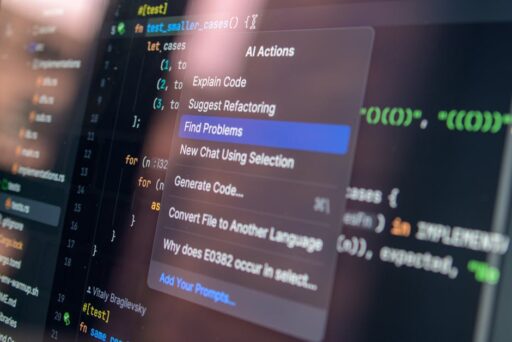
- Full-code reasoning: Engineers can ask the model to review or refactor across many source files in one go.
- Long-document analysis: Analysts can run thematic extraction, annotation, or comparative summaries on entire books, whitepapers or regulatory filings.
- Persistent project memory: Product teams can maintain continuity in conversations spanning designs, meeting notes and evolving requirements.
Longer context also reduces prompt engineering overhead. Instead of creating a chain of summaries and status updates to keep the model informed, teams can feed the complete relevant context and ask targeted questions—improving precision and reducing hallucination risks tied to lossy summarization.
PowerPoint integration: iterate presentations inside the app
Embedding Claude as a side panel inside PowerPoint removes the last-mile friction between idea generation and final slide edits. Instead of building a deck in a separate tool and transferring files, users can now craft, refine and format slides interactively within PowerPoint with the model’s help. That makes rapid iteration and collaborative editing easier for non-engineering users.
Use cases for the PowerPoint side panel
- Turn research notes into formatted slides and speaker notes.
- Quickly rework language for different audiences (executive summary, technical appendix).
- Auto-generate visuals text descriptions and recommended slide layouts to speed design handoffs.
For organizations that rely on polished presentations—sales teams, product launches or investor updates—this integration shortens the path from insight to shareable content.
Who benefits from Opus 4.6?
Opus 4.6 was developed with a broader set of knowledge workers in mind. While earlier releases focused heavily on software development and code generation, the new features make Claude valuable to:
- Product managers and designers who need cross-document synthesis and iteration.
- Financial analysts running large-scale model-assisted research and reporting.
- Marketing and sales teams creating tailored decks and messaging quickly.
- Engineering teams that want to reason across entire repositories in one session.
The model’s flexibility means individuals from different backgrounds can use the same base model to accomplish diverse tasks by defining agent responsibilities and feeding relevant context.
How does Opus 4.6 fit with Anthropic’s broader product ecosystem?
Opus 4.6’s agent teams and longer context build on previous Anthropic integrations designed to put Claude at the center of workplace workflows. For teams exploring plug-ins and desktop agent deployments, the new capabilities offer a clearer path to automation and collaboration. For more on Anthropic’s enterprise automation direction, see this overview of Anthropic’s plug‑ins and workplace integrations: Anthropic Cowork Plug-ins and Anthropic Claude Apps. If you’re evaluating desktop agentic workflows for non-technical teams, this piece provides additional context: Anthropic Cowork: Desktop Agentic AI for Non-Technical Teams.
Technical and operational considerations
Design patterns for agent teams
To get the most from agent teams, teams should adopt explicit design patterns:
- Define roles: create clear agent intentions (e.g., “data cleaner”, “requirements extractor”).
- Limit scope: keep responsibilities focused to reduce cross-agent ambiguity.
- Standardize interfaces: use consistent messaging formats so agents can hand off reliably.
- Retry and reconciliation: build automated checks where outputs are validated and reconciled before final assembly.
Cost and performance trade-offs
Longer context windows and multi-agent parallelism can increase compute costs. Organizations should weigh speed and convenience against operational budgets and design hybrid strategies—using long-context sessions for heavy synthesis tasks and shorter sessions for routine Q&A. Instrumentation and logging are essential to measure ROI and keep models aligned with human reviewers.
Safety, provenance and compliance
Parallel agent workflows introduce new provenance needs: who produced which piece of output, and how were disagreements resolved? Teams should implement:
- Audit logs for agent interactions and decisions.
- Human-in-the-loop checkpoints for high-risk outputs (finance, legal, clinical).
- Clear data governance around what context is safe to share in long sessions.
These practices help reduce hallucination risks and support regulatory or internal compliance reviews.
Implementation tips for early adopters
If you’re trialing Opus 4.6 today, start with narrow pilots that demonstrate measurable impact. Recommended pilot projects:
- Codebase audit: let the model review a 6–12 month module of your repo and produce prioritized technical debt reports.
- Presentation automation: convert a product spec and two weeks of meeting notes into a polished investor deck via the PowerPoint side panel.
- Research synthesis: feed multiple competitor reports into a single session and ask for a concise threat/opportunity matrix.
Measure time saved, number of iterations reduced, and qualitative feedback from reviewers. Use these metrics to build a business case for broader deployment.
Comparison: single-agent vs multi-agent workflows
Single-agent flows are simpler to build and often sufficient for short, linear tasks. Multi-agent teams excel when tasks are complex, heterogeneous or require parallel workstreams. Consider these criteria when choosing an approach:
- Task complexity: use agent teams when tasks include independent subtasks that can be parallelized.
- Coordination overhead: prefer single-agent for tightly-coupled sequential workflows.
- Auditability: agent teams provide clearer ownership for suboutputs, aiding traceability.
Outlook: broader implications for AI-assisted work
Opus 4.6 demonstrates a trend toward AI systems that mirror human collaboration patterns—specialized contributors coordinating to complete multifaceted jobs. The combination of agent teams and extensive context memory reduces friction for high-complexity work and accelerates adoption among non-developer knowledge workers. Over time, we can expect similar patterns to appear across models as teams look to scale workflows that were previously manual or fragmented.
Practical next steps for leaders
- Identify repeatable, high-value processes that can be modularized into agent responsibilities.
- Run short cross-functional pilots that include product, engineering and business stakeholders.
- Invest in logging, validation and human review steps to preserve quality as automation scales.
Conclusion: should your team adopt Opus 4.6?
If your workflows require multi-document reasoning, large-scale codebase analysis or faster slide production for business audiences, Opus 4.6 offers meaningful advances. Agent teams unlock parallelism and clearer ownership; the 1M-token context window simplifies long-form synthesis; and PowerPoint integration reduces production friction. Start with focused pilots, measure outcomes, and expand where the model demonstrably reduces manual effort or speeds decision-making.
Ready to explore Opus 4.6 in your workflows? Begin with a small pilot—pick one high-impact use case, instrument results, and iterate. For more on integrating Claude into enterprise apps and desktop agents, see our previous coverage on Anthropic Cowork Plug-ins and Anthropic Claude Apps.
Call to action: Want a custom pilot checklist for your team? Contact us to design a targeted Opus 4.6 proof-of-concept that measures time savings, quality gains and compliance readiness.