
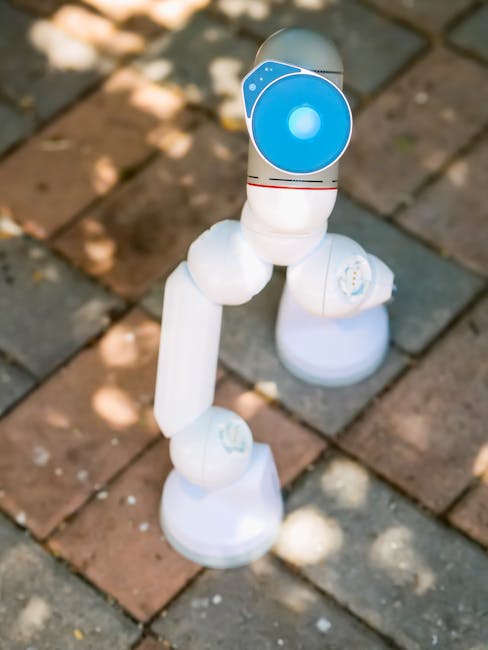
AI Visual Memory: Enabling Wearables & Robots to Remember
As artificial intelligence moves out of the purely digital realm and into wearables, robots, and edge devices, a new capability is emerging as essential: visual memory. AI visual memory refers to systems that can record, index, summarize and recall visual experiences over time. Building this capability requires new infrastructure, custom data collection strategies and careful attention to privacy and security.
What is AI visual memory and why does it matter?
AI visual memory is the ability of a system to form persistent, searchable visual representations of the world — essentially, to remember what it has seen. Unlike text memory, which is typically structured and easy to index, visual memory must compress and index streams of video and images and associate them with events, objects, people and context. That makes it crucial for real-world AI tasks where sight is the dominant input modality.
Why this matters now:
- Wearables and smart glasses need to let users revisit real-world moments, not just stream video.
- Robots benefit from episodic recall to navigate complex environments, perform maintenance, and learn from past actions.
- Enterprise and consumer use cases — from assisted living to field service — demand robust visual recall and fast retrieval.
How do visual memories differ from text-based memories?
Text-based memory systems index structured tokens and short passages; they are optimized for discrete queries and are often framed as retrieval-augmented generation (RAG). Visual memory must:
- Embed long video segments into compact, searchable representations;
- Handle multimodal associations (visual features + audio + timestamp + location);
- Support efficient temporal search and summarization (find “when did this happen” rather than just “what”);
- Preserve privacy and perform selective retention/summarization to limit storage and risk.
Core infrastructure: How visual memory systems are built
Building a production-grade visual memory layer typically requires two orthogonal capabilities: a scalable video embedding and indexing pipeline, and a disciplined data collection strategy to generate the training signals models need to generalize.
1. Embedding and indexing video into memory
At scale, raw video is too large and noisy to store unprocessed. Visual memory platforms transform video into structured, retrievable data through a pipeline that includes:
- Frame extraction and keyframe selection to reduce redundancy.
- Multimodal embedding where visual features, audio cues, and timestamps are converted into vectors.
- Temporal indexing that preserves sequence information and enables queries like “show events near X time” or “find when object Y appeared.”
- Summarization and retrieval layers that produce human-readable clips, highlights, or textual summaries on demand.
Modern solutions often combine vision-language reasoning models with video search and summarization components to deliver fast, context-aware recall.
2. Capturing the right training data
High-quality visual memory models require real-world, multimodal video captured in the contexts where the systems will operate. Off-the-shelf cameras and consumer devices often prioritize high-resolution footage and battery life over the continuous, indexed data formats needed for training memory models. That drives some teams to design custom capture rigs tuned for continuous, efficient data recording and metadata capture.
Key considerations for data collection:
- Wearable-friendly form factors that record naturalistic user activity.
- Efficient codecs and on-device preprocessing to limit upload and storage costs.
- Rich metadata (timestamps, inertial data, location) that enables temporal and contextual search.
- Clear consent and labeling practices so data can be used for model training while respecting privacy.
What technical building blocks power visual memory?
Several model and systems components come together to enable visual recall:
Vision-language reasoning models
These models align visual inputs with natural language and reasoning abilities, enabling queries such as “When did I last see the red jacket?” or “Summarize this morning’s interactions.” They form the semantic core that maps raw visual embeddings to meaningful search and answers.
Multimodal indexing engines
Indexing engines store vectorized visual embeddings and support approximate nearest neighbor (ANN) search, time-aware retrieval, and fusion of multimodal signals. They must balance latency, storage cost, and recall accuracy for production workloads.
On-device inference and edge optimizations
Because wearables and many robots operate with intermittent connectivity, efficient on-device inference — or hybrid edge/cloud execution — is critical. Porting visual memory models to run on mobile and embedded processors reduces latency and protects sensitive data by limiting cloud uploads.
Which real-world applications benefit first?
Visual memory unlocks practical improvements across many domains. Examples include:
- Personal wearables: searchable life-logging, assistive recall for memory-impaired users, and contextual reminders based on recent visual context.
- Service robots: episodic recall for troubleshooting, handoff of learned visual context between shifts, and improved autonomy by remembering prior interactions.
- Workplace AR: robust visual note-taking and searchable video summaries for field service and inspections.
- Safety and compliance: long-tail event retrieval for incident reconstruction while balancing redaction and retention policies.
What are the commercialization and timing hurdles?
Although demand exists now, many founders argue the market matures in stages. Early revenue is likely to come from enterprise and vertical applications that accept stricter security, storage, and consent processes. Consumer-scale adoption will depend on lower-cost edge hardware, clear privacy guarantees, and compelling user experiences for recall and summarization.
Startups in this space often focus on building the underlying model and infrastructure stack first, with hardware integration and broad consumer rollouts coming later. Investors have backed prototypes and early deployments, including seed and follow-on rounds, recognizing the long-term value of a reliable visual memory layer.
What are the privacy, safety and security trade-offs?
Visual memories are inherently sensitive: recordings can include bystanders, private spaces, and personally identifiable information. Responsible deployment requires:
- Privacy-by-design architectures that minimize raw data retention and support on-device processing;
- Consent flows and selective capture controls for users and affected parties;
- Robust access controls and encryption for stored embeddings and retrieval endpoints;
- Policy and governance frameworks that define retention windows, redaction, and audit trails.
Security best practices from agentic systems apply here as well; for a deeper dive on securing AI agents and agentic infrastructure, see our piece on AI Agent Security: Risks, Protections & Best Practices.
How can developers and companies prepare for visual memory?
Teams aiming to add visual memory capabilities should prioritize infrastructure and data hygiene early. Concrete next steps include:
- Define the retention and consent model for your target users or customers.
- Build or adopt efficient on-device preprocessing to extract keyframes and metadata before upload.
- Design an embedding and indexing pipeline that preserves temporal structure and supports multimodal queries.
- Collect representative training data in the operational contexts where models will be used; consider synthetic augmentation where appropriate.
- Audit and secure retrieval APIs, and add fine-grained access controls and monitoring.
For teams building agentic systems that integrate memory, our guide on How to Build AI Agents offers practical patterns for modular agents that can leverage episodic memory effectively.
How do visual memory platforms fit into broader AI infrastructure?
Visual memory is part model, part storage, and part orchestration. It interacts closely with broader AI infrastructure topics such as memory orchestration and cost optimization. Teams should design memory layers to be modular so they can plug into existing storage, logging and retrieval infrastructure. Our analysis of AI Memory Orchestration: Cutting Costs in AI Infrastructure outlines techniques that are directly applicable to visual memory systems.
What are the near-term research and product questions?
Key open questions that researchers and builders are tackling include:
- How to compress long video streams into semantically useful, low-cost embeddings without losing critical temporal cues.
- How to efficiently retrieve moments that match complex, compositional queries (e.g., “when did I hand the wrench to Sam near the loading bay?”).
- How to standardize metadata and interoperability so visual memories can be portable between platforms while preserving privacy.
Conclusion: Why visual memory will be a foundation for physical AI
AI has made remarkable progress in digital tasks; the next frontier is reliable perception and recall in the physical world. Visual memory is a foundational capability for wearables, robots, and edge assistants that need to learn from past experiences and support users with contextualized recall. The technical challenges are significant — embedding video, collecting usable training data, and protecting user privacy — but so are the commercial opportunities across healthcare, enterprise, robotics and consumer devices.
For teams and leaders building in this space, prioritize modular infrastructure, ethical data collection, and on-device efficiency. Start with narrow, high-value verticals where recall provides immediate ROI, then expand as hardware and policy constraints ease.
Next steps: Ready to explore visual memory for your product?
If you’re building wearables, robotics, or edge AI and want to evaluate how a visual memory layer could boost your product, start with a low-risk pilot: define privacy rules, collect a small labeled dataset in your target environment, and prototype retrieval use cases with a local indexing engine. For more guidance on integrating agents and memory, review our resources and case studies.
Call to action: Subscribe to Artificial Intel News for weekly briefings on AI infrastructure, agentic systems, and visual memory breakthroughs. If you’re piloting visual memory technology and want feedback from industry experts, get in touch to request a consultation.