

AI Data Center Spending: Are Mega-Capex Bets Winning?
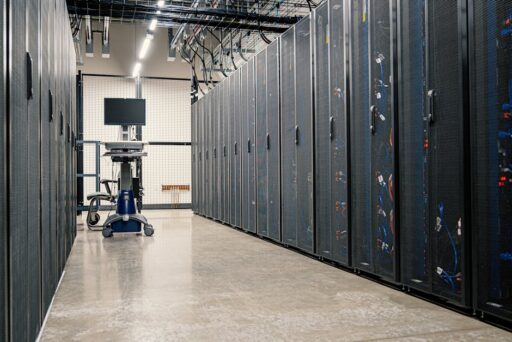
The technology industry looks, at times, like a straight race to build the largest, most powerful data centers. The argument is simple: whoever controls the most compute capacity will have the edge in training larger models, deploying higher-performance services, and ultimately shaping the AI-driven future. That logic has driven companies to plan capital expenditures in the hundreds of billions for the coming years, with public statements emphasizing investments in AI, chips, robotics, and related infrastructure.
Why are companies pouring huge sums into AI data centers?
There are three economic beliefs driving massive AI capital investment:
- Compute as the scarce resource: Training state-of-the-art AI models consumes extraordinary compute. Firms expect compute capacity to be the bottleneck that determines competitive advantage.
- Vertical control: Owning the stack — from chips to racks to data pipelines — reduces reliance on third parties, enables custom optimizations, and preserves margins on AI services.
- Strategic signaling: Large capex commitments send a message to partners, customers, and competitors that a company is committed to leading the next technological era.
But those forces coexist with practical realities: building and operating hyperscale data centers is expensive, slow, and complex. Not every dollar earmarked for capital expenditure is purely for AI compute — many firms are converting existing logistics and fulfillment real estate, investing in robotics, or expanding traditional cloud capacity. The headline numbers are eye-catching, but the nuance matters when evaluating whether this strategy will actually win in the long run.
Is spending more compute the same as winning at AI?
That’s the key question. Historically, raw resource dominance didn’t automatically translate to market victory. Advantages must be converted into profitable products and defensible experiences. Here are the limits and levers that complicate the simple “more compute = more success” equation:
Limits of a capex-first approach
- Diminishing returns: Model scaling eventually hits efficiency and utility plateaus. Bigger models cost more to train and serve, and not every increase in performance yields proportional user value.
- Operational complexity: Hyperscale compute requires sophisticated cooling, power, and networking investments — all subject to supply-chain and regulatory risk.
- Investor scrutiny: Massive capex plans can spook shareholders who want near-term returns, creating pressure to justify the business case for every dollar spent.
Ways compute outspends can be converted into wins
- Product differentiation: Custom models or features that only the company can deliver at scale (for example, latency-sensitive consumer services or integrated enterprise tooling).
- Cost leadership: Owning infrastructure can lower long-run unit costs for model training and inference, enabling competitive pricing or higher margins.
- Data moat: Exclusive data captured through products and services can amplify the advantage of owned compute.
For firms weighing capex-heavy strategies, the challenge is making a credible link between buildout and sustained revenue. Without clear monetization paths, even the most impressive infrastructure can struggle to justify itself in the eyes of investors.
How are investors reacting — and why does sentiment matter?
Investor reaction to large AI capital plans has been mixed. While some market participants accept multi-year infrastructure buildouts as strategic commitments with long-term payoff, others punish firms for near-term margin erosion and cash outflows. Stocks often respond negatively when investors see large capex increases without clear, short-term revenue offsets.
Why this matters:
- Cost of capital: Increased investor skepticism can raise financing costs or limit access to equity at attractive terms.
- Management pressure: CEO and CFO teams face demands to demonstrate ROI and prudent capital allocation, often shifting public messaging and priorities.
- Strategic flexibility: Market backlash can force firms to reprioritize projects or seek partnerships to share costs, reducing the intended competitive advantage of owning infrastructure outright.
What are the alternatives to a pure capex war?
Companies have multiple avenues to compete in AI without betting everything on capital-heavy data centers. Leaders frequently pursue hybrid approaches that combine selective infrastructure investment with smarter, more efficient use of compute.
- Model and software optimization: Improving model efficiency (quantization, pruning, distillation) reduces compute needs while preserving performance.
- Specialized chips and co-design: Custom accelerators and hardware-software co-design can deliver orders-of-magnitude efficiency gains compared with general-purpose GPUs.
- Hybrid cloud and partnerships: Sharing capacity through partnerships or multi-cloud strategies avoids embedding cost while preserving access to burst compute.
- Edge and on-device AI: Shifting inference workloads to the edge reduces data-center demand and addresses latency and privacy concerns — an increasingly important complement to centralized compute (see our coverage of on-device processors for sovereignty concerns).
- Third-party marketplaces: Using spot markets and third-party providers for training bursts can trade capex for opex when appropriate.
These alternatives highlight a theme: optimization and architectural choice often rival raw spending as determinants of success. For more on how development and operations teams can adapt to AI-first engineering, see our article on AI app infrastructure and DevOps.
What should company leaders do now?
Executives planning large AI investments should combine ambition with discipline. The following playbook helps translate capex into sustainable advantage:
- Map spending to revenue pathways: For each major investment, require a clear product or business case that ties infrastructure to measurable customer value.
- Prioritize efficiency programs: Fund R&D for model compression, compiler-level optimizations, and runtime improvements that lower compute per user.
- Use staged commitments: Adopt a phased capex approach with go/no-go milestones tied to technical and commercial milestones.
- Explore shared infrastructure: Consider capacity-sharing arrangements, inter-company partnerships, and co-location deals to spread risk.
- Invest in talent and tooling: Building out internal capabilities across ML systems, SRE, and hardware-software co-design often yields better ROI than raw server count increases.
- Measure carbon and cost per inference: Operational metrics that connect compute usage to cost and environmental impact should be part of every board review.
Practical KPIs to track: cost per training run, cost per inference, utilization rates, PUE (power usage effectiveness), and incremental revenue per petaflop-year deployed. These metrics make capex debates concrete and finance-friendly.
How will this reshape the AI landscape in 2026 and beyond?
The coming years will reveal whether owning vast pools of compute is a decisive moat or an expensive prerequisite that many firms struggle to monetize. Expect several structural shifts:
- Consolidation of infrastructure providers: Economies of scale will favor organizations that can operate at the highest utilization with the most efficient hardware.
- Rise of efficiency-first startups: Firms focused on software, compilers, and hardware co-design will attract attention and capital for delivering compute-efficient AI solutions.
- Regulatory and geopolitical frictions: Export controls, data sovereignty rules, and supply-chain constraints will influence where and how companies invest in compute capacity.
- Mix of centralized and edge compute: The future is likely hybrid. Centralized supercomputing will handle large model training, while edge and on-device systems will deliver user-facing inference with lower latency and privacy risk.
These trends indicate a more nuanced competitive landscape than a pure capex sprint. For context on how infrastructure scale is being framed across the industry, see our analysis of scaling compute and company strategies in Meta Compute and our roundup of broader market dynamics in AI Funding Trends 2026.
Key takeaways
- Massive data center spending signals strategic intent but does not guarantee product-market success.
- Investors demand clearer ties between capex and revenue; companies must explain how infrastructure drives monetization.
- Efficiency, hardware-software co-design, and hybrid architectures can reduce the need for unlimited capex while preserving competitiveness.
- Executives should pair bold infrastructure plans with disciplined milestones, operational KPIs, and alternative cost-sharing strategies.
Final thought
AI data center spending is a centerpiece of modern tech strategy, but it should be a means, not an end. Firms that combine selective capital investment with relentless engineering efficiency and clear commercial pathways will be best positioned to turn infrastructure into durable advantage.
Ready to dig deeper?
If you want more practical guidance on building efficient AI systems, optimizing cloud costs, or mapping capex to product strategy, subscribe to our newsletter and explore related posts like AI App Infrastructure: Simplifying DevOps for Builders and Meta Compute: Scaling AI Infrastructure for the Future. Stay informed and make capital decisions that drive long-term value.
Call to action: Subscribe now for weekly analysis on AI investments, infrastructure, and strategy — and get the frameworks your leadership team can act on today.