AI Health Ring with Agent Coach: What the New Smart Ring Brings to Wearables
The latest generation of smart rings is shifting from passive sensors to active health partners. A new AI health ring release introduces a generative AI “agent coach,” an incentives-driven rewards marketplace, and expanded biometric tracking designed to help users move from insight to action. This article examines the product features, behavior‑change mechanics, data and privacy claims, clinical escalation pathways, and what this means for the broader wearable and AI-health ecosystem.
What is an AI agent coach and how does it work?
An AI agent coach is a context-aware, generative AI layer that interprets continuous biometric and behavior data and turns those signals into personalized, actionable guidance. Unlike static dashboards that merely show trends, an agent coach proactively recommends:
- Daily tasks and workouts tailored to current recovery and readiness
- Recovery protocols and sleep hygiene prompts
- Supplement suggestions and lifestyle change nudges
- Connections or referrals to licensed medical professionals when risk thresholds are met
These agent functions use models that synthesize multiple data streams—sleep quality, heart rate variability (HRV), resting heart rate (RHR), movement and stress measures—to generate individualized programs. The ring’s AI can flag concerning trends (for example, sustained low HRV or elevated RHR) and recommend escalation steps so users access the right care pathway.
Key features: sensors, software and rewards
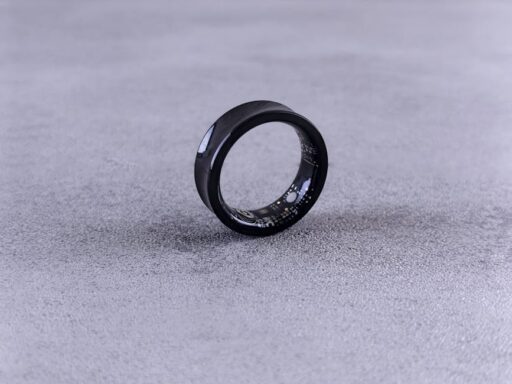
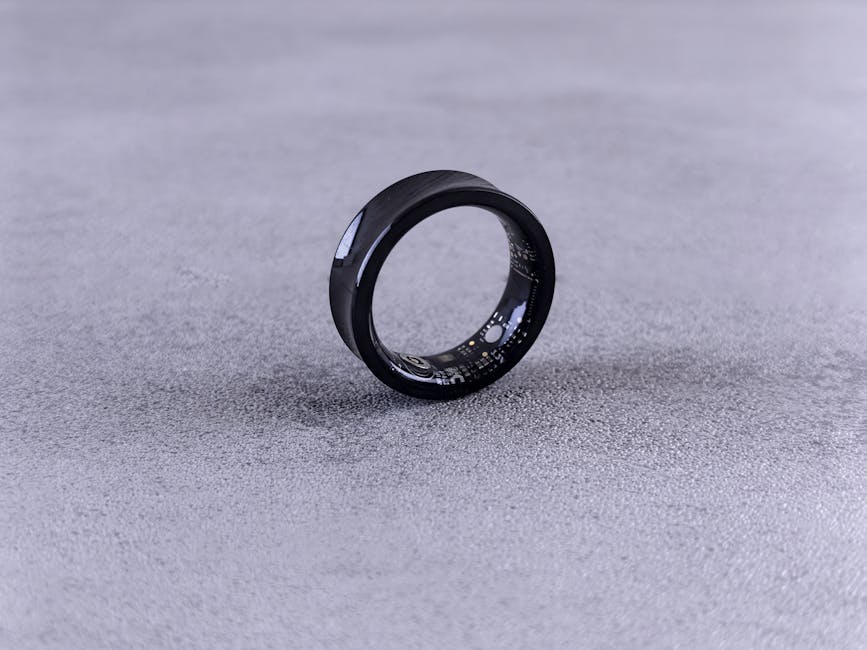
The new smart ring combines hardware sensing with a consumer app and a built-in marketplace. Core capabilities include:
Biometric and behavioral tracking
The ring monitors sleep quality, HRV, resting heart rate, movement and recovery metrics. These signals are used to calculate an aggregate metric described by the company as Pace of Aging (PoA)—an index that estimates whether a user’s physiological state is aging faster or slower than their chronological age. PoA is presented as a trend-focused indicator to help users prioritize interventions.
Generative AI agent coach
The ring’s AI agent produces tailored daily programs: micro-tasks, exercise plans, recovery suggestions and supplement recommendations. The agent also supports conversational interaction so users can ask follow-up questions and get contextual guidance based on recent trends.
Incentives and marketplace
To drive sustained engagement, the product introduces a points-based system. Users earn digital “health points” for behaviors such as:
- Meeting daily step goals (for example, 10,000 steps)
- Achieving consistent sleep targets
- Completing guided activities or conversing regularly with the AI coach
- Participating in structured sports or recovery routines
Points can be redeemed in an integrated marketplace for discounts on health supplements and partner products, creating a closed-loop incentive system that rewards healthy behavior rather than just reporting it.
How does the ring translate metrics into clinical escalation?
One notable feature is the platform’s stated escalation pathway. When biometrics or behavioral patterns exceed defined risk thresholds—such as prolonged poor sleep combined with declining HRV—the AI agent can suggest lifestyle changes and, when appropriate, refer users to licensed medical professionals. This hybrid model blends automated coaching with human clinical oversight, aiming to reduce false alarms while ensuring timely intervention for genuine concerns.
How does it protect user data and privacy?
Data security is a central question for any health wearable. The company reports end-to-end encryption for user data and has positioned decentralized technologies as part of its security posture. For prospective buyers, evaluate three aspects:
- Where and how data is stored: cloud provider, encryption in transit and at rest
- Access controls and who can retrieve or act on clinical escalations
- Transparency around how biometric models are trained and whether de-identified data is shared with partners
Ask for clear documentation and independent audits when assessing privacy claims—especially when health recommendations and marketplace integrations are involved.
Product traction and business signals
The company reports rapid early adoption: more than 30,000 units sold across its first two models and an app user base of approximately 250,000 in over 100 countries. These figures indicate a consumer appetite for wearables that combine passive sensing with active behavior change mechanisms. The company also completed a $5 million seed round led by Draper Associates and backed by investors with backgrounds in blockchain and web3, indicating investor interest in combining decentralized architectures with AI-driven health products. The team has signaled plans for a crowdfunding campaign to expand manufacturing and distribution.
Why incentives matter: behavioral economics meets wearables
Long-term health outcomes depend on sustained behavior change, not one-off insights. Traditional wearables often suffer from declining engagement after the novelty wears off. Incentive systems that reward consistent behavior—coupled with personalized coaching—address two common failure modes:
- Motivation decay: points and marketplace rewards create extrinsic motivation that can bootstrap habit formation
- Action gap: generative coaching reduces friction by turning insights into incremental, achievable tasks
When designed correctly, incentive mechanisms can complement intrinsic motivations (well-being, fitness goals) and improve retention and outcomes. However, designers must avoid perverse incentives that encourage gaming or short-term behavior that doesn’t improve long-term health.
How will this affect enterprise and clinical use?
Wearable AI that escalates care and integrates with telehealth or clinician networks could be a strategic building block for enterprise health programs—employee wellness, remote patient monitoring, and chronic disease management. Enterprises exploring agentic AI deployments should consider device interoperability, clinical validation, and security standards. For a broader context on agent-based enterprise opportunities and governance, see our coverage of enterprise AI agents and best practices for deployment in the workplace.
Risk management is also essential. Review the security posture and threat models for devices that collect continuous health telemetry—our analysis of AI agent security risks and protections outlines enterprise considerations for agent-level escalation and data governance.
How does on-device and edge processing change the equation?
Processing models on-device or at the edge can reduce latency, improve privacy, and enable offline functionality—particularly valuable for wearables. Integrating local inference for preliminary analytics and reserving cloud resources for heavy personalization updates is an architectural pattern gaining traction. For more on how edge AI brings smarter features to consumer devices, see our piece on edge AI assistants.
What are the limitations and open questions?
Despite promising features, several limitations merit scrutiny:
- Clinical validation: Are PoA scores and AI-generated recommendations validated in peer-reviewed studies?
- False positives and negatives: How does the system balance sensitivity and specificity to avoid unnecessary escalation?
- Regulatory clarity: Which claims require medical device classification or regulatory oversight in target markets?
- Data portability: Can users export their biometrics and clinical notes to other providers or EHR systems?
Addressing these questions will determine whether such devices scale responsibly beyond wellness into clinical-grade monitoring.
How does this compare to other wearable approaches?
Traditional fitness trackers focus on step counts and discrete workouts. More advanced wearables layer physiological metrics like HRV and skin temperature. The distinguishing characteristics of this new ring are:
- Generative, conversational coaching that turns metrics into daily tasks
- A behavioral incentive marketplace that rewards consistent healthy actions
- Explicit clinical escalation pathways tied to licensed professionals
These elements combine behavioral science with AI to move from passive measurement to active health management.
What should prospective buyers evaluate?
If you’re considering this AI health ring, evaluate the offering along these dimensions:
- Accuracy and validation of sensors and derived metrics
- Transparency of AI models and the logic behind recommendations
- Privacy, encryption, and data sharing policies
- Clarity on reward mechanics and marketplace partners
- Customer support and clinical escalation quality
Request documentation and, if possible, a trial period to assess how the ring’s coaching changes your daily behaviors over several weeks.
Conclusion: a promising step, with caveats
The new AI health ring represents a thoughtful evolution in wearables—merging continuous biometrics, generative personalization, and an incentives system to encourage sustained behavior change. Its combination of PoA tracking, AI-driven programs, and marketplace rewards aims to solve the engagement problem that has long limited the effectiveness of consumer wearables.
However, broader adoption will depend on rigorous validation, transparent data governance, and careful design to avoid gaming or unintended consequences. Organizations and consumers should weigh the potential benefits with privacy, clinical, and regulatory trade-offs.
Next steps and call to action
Interested in real-world implications of agent-driven wearables or deploying similar agent architectures in enterprise environments? Subscribe to Artificial Intel News for in-depth analysis, product comparisons, and privacy best practices. If you’re evaluating wearables for a wellness program or clinical pilot, contact us to request a research brief or guided checklist to vet device vendors.
Take action: Sign up for our newsletter to receive weekly briefs on AI wearables, enterprise agent use cases, and security best practices—stay ahead as intelligent wearables reshape health.