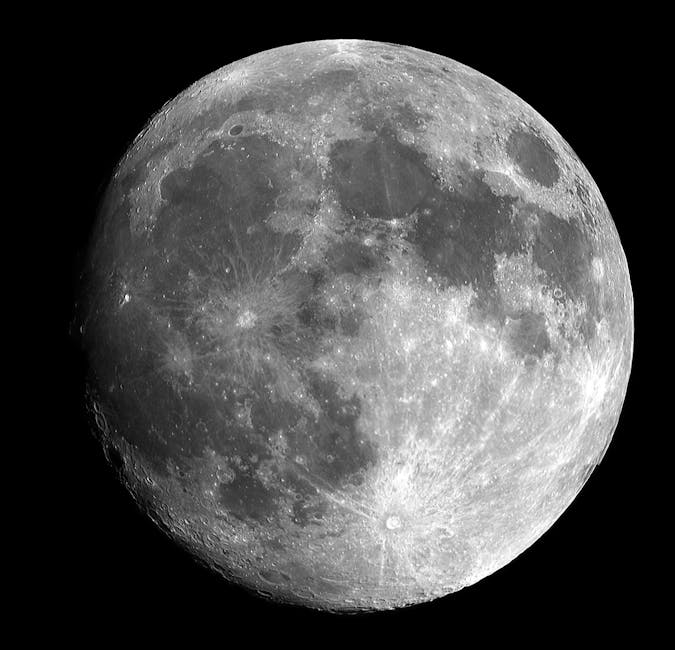
Moon Base AI Infrastructure: Musk’s Lunar Data Vision
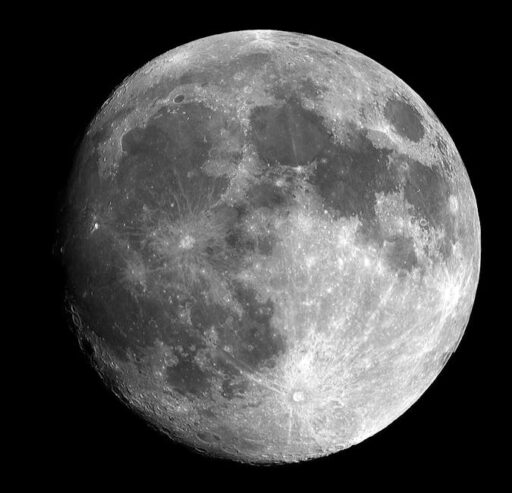
When leaders in AI and aerospace describe the future of compute, their language shapes hiring, investment, and product roadmaps. Recent remarks invoking a moon base, mass drivers and the idea of producing and launching AI satellites from the lunar surface bring an ambitious — and polarizing — vision into sharper focus: what if the next frontier for large-scale AI infrastructure isn’t a hyperscale campus on Earth but a manufacturing and compute hub on the Moon?
What would a moon base for AI infrastructure enable?
This question helps surface the core claims behind the vision and is optimized to appear as a concise featured snippet: a lunar facility could enable dramatically larger energy budgets for training and operating models, lower orbital launch costs for specialized hardware, and the potential for new architectures that couple manufacturing, power generation and orbital deployment.
Key proposed capabilities
- High-volume solar power capture on the lunar surface to feed continuous compute.
- In-situ manufacturing of compute hardware to reduce Earth-to-orbit launch mass.
- Mass-driver or maglev systems to send payloads from the Moon into lunar orbits or deeper space.
- Distributed space-based data centers that supplement or replace costly terrestrial expansions.
Why is the Moon suddenly part of the AI conversation?
There are three complementary drivers behind the shift from terrestrial data centers to space-forward thinking:
- Energy scale: Training at extreme scale is energy intensive. The Moon offers high-irradiance solar power and long sunlight cycles in select regions, which could, in theory, enable very large continuous energy budgets.
- Launch economics and capabilities: As launch costs decline and reusable vehicles mature, the calculus for manufacturing or assembling in space changes. If launching complex payloads from the Moon becomes cheaper than lifting them out of deep gravity wells on Earth, production near the point of deployment becomes attractive.
- Strategic differentiation: A lunar narrative is also a recruiting and PR tool. Bold roadmaps help align teams and attract engineers who want to work on grand challenges that blend AI, robotics and aerospace.
Is moon-based AI infrastructure feasible in the near term?
Short answer: not yet. Medium-term (2030s) feasibility depends on several technological and economic breakthroughs. Below are the most important practical challenges and the progress required to overcome them.
Technical and economic hurdles
- Launch and transport economics: Sending mass, tools and raw materials to the lunar surface is still expensive. The vision depends on substantially lower launch costs and frequent, reliable transportation.
- In-situ resource utilization (ISRU): Extracting and processing lunar regolith into metals, semiconductors precursors, and building materials is nascent research. Scaling ISRU for complex electronics remains speculative.
- High-volume manufacturing in harsh environments: Semiconductor fabrication demands extreme precision and contamination control — conditions that are difficult to guarantee on the Moon without major breakthroughs in controlled-environment manufacturing modules.
- Thermal management and reliability: Space hardware must contend with radiation, thermal cycling, micrometeoroids and repair logistics. Designing long-lived, maintainable compute racks on the Moon or in orbit creates new reliability paradigms.
- Power and storage: While solar flux is strong, energy storage for lunar night or shadowed regions and the conversion infrastructure are both non-trivial.
Research and prototype milestones to watch
Progress that would make lunar AI infrastructure more credible includes:
- Demonstrations of robust ISRU for metal extraction and 3D printing of structural and electronic components.
- Operational lunar surface power plants with high-efficiency transmission to local factories.
- Reliable automated assembly lines for mechanical systems and proven strategies for contamination control in non-terrestrial fabs.
- Scaled tests of electromagnetic or mass-driver launch systems that can move payloads into lunar or cislunar orbits.
How does lunar compute compare to orbital data centers and terrestrial hyperscalers?
There is existing industry interest in moving some compute off-planet. Prior coverage of orbital data centers highlights a pragmatic step between terrestrial campuses and full lunar manufacturing: building data centers in orbit or near-Earth locations can reduce cooling and land constraints while remaining more reachable than the lunar surface. See our analysis of orbital data centers and the economics behind moving compute to space for deeper context: Orbital Data Centers: Can AI Shift Compute to Space? and Orbital Data Centers: Why AI Infrastructure Moves to Space.
Terrestrial hyperscalers have the advantages of dense supply chains, mature construction, and much lower latency to end-users. Space-based compute would trade latency and logistical simplicity for extreme scale and potentially lower marginal energy costs per unit of compute if solar capture and manufacturing scale sufficiently.
What are the strategic implications for AI companies and investors?
A moon-base narrative reshapes strategic priorities across three areas:
- Talent and recruitment: Bold long-term visions attract talent motivated by audacious goals. Some engineers prefer incremental product work; others are drawn to moonshot programs.
- Capital allocation: Investors must weigh near-term profitability against massive, long-horizon infrastructure bets. Our coverage of AI data center spending trends explores how capital is flowing into large-scale compute and where returns are expected: AI Data Center Spending: Are Mega-Capex Bets Winning?.
- Competitive positioning: A company that credibly advances space-based compute could differentiate on scale and energy, but only if it solves the cost and manufacturability problems before competitors expand terrestrial capacity or innovate in algorithmic efficiency.
What would a realistic roadmap look like?
A pragmatic multi-decade roadmap blends near-term, medium-term and long-term phases:
- Near term (next 3–7 years): Demonstrate modular orbital data centers, reduce launch costs, and pilot lunar power and small-scale robotics for prospecting and assembly.
- Medium term (7–15 years): Validate ISRU techniques, establish continuous lunar surface operations, and build prototype manufacturing cells for non-sensitive hardware.
- Long term (15+ years): Scale lunar manufacturing to produce large volumes of compute hardware, deploy mass drivers for economical payload ejection, and operate integrated lunar-orbital AI compute platforms.
What are the ethical and governance questions?
Moving critical infrastructure to the Moon raises new policy and safety concerns. Ownership of lunar resources, environmental impacts on the lunar surface, international coordination for orbital traffic, and the geopolitical implications of space-based compute must be addressed through multilateral frameworks. AI safety considerations extend to preventing misuse of hyper-scale models enabled by unprecedented energy budgets.
Questions regulators and companies should consider
- Who controls manufacturing outputs on the Moon, and how are disputes arbitrated?
- What environmental standards should protect the lunar surface?
- How do we ensure transparency and auditing for models trained with space-scale compute?
Is the moon-base vision primarily PR or a plausible engineering plan?
It is both. Visionary narratives have long served dual purposes: aligning teams internally and signaling market ambition externally. At the same time, turning a lunar dream into a real engineering program requires solving specific, measurable problems — not only inspiring posters. The most credible programs will pair ambitious storytelling with clear technology milestones and transparent risk management.
What should engineers, investors and policymakers read next?
For engineers and product leaders, focus on cross-disciplinary collaborations between robotics, materials science and semiconductor manufacturing. Investors should monitor milestones in ISRU, lunar power demonstrations, and launch economics. Policymakers must begin crafting cooperative frameworks for resource use, orbital traffic management and the ethical deployment of massive AI compute.
Relevant prior coverage
- Orbital Data Centers: Can AI Shift Compute to Space? — an analysis of intermediate steps toward off-Earth compute.
- AI Data Center Spending: Are Mega-Capex Bets Winning? — how capital is flowing into large compute projects.
- Orbital Data Centers: Why AI Infrastructure Moves to Space — broader context on the incentives to leave Earth for compute growth.
Final assessment: stretch goal or strategic necessity?
The idea of a moon base dedicated to AI manufacturing and deployment is a stretch goal today but a strategically provocative one. It reframes how organizations think about energy, supply chains and the scale of intelligence they aim to build. Whether it becomes a practical option depends on sustained progress in launch economics, lunar manufacturing, and international cooperation.
Practical checklist for stakeholders
- Track advances in ISRU and contamination-controlled manufacturing.
- Monitor launch cost trends and reusable vehicle cadence.
- Engage with policymakers on rules for lunar resource use and orbital traffic.
- Balance investment between algorithmic efficiency and infrastructure scale.
Moon-base AI infrastructure isn’t a guaranteed path to superintelligence, but it represents a bold attempt to align hardware scale with long-term AI ambitions. For companies and governments thinking ahead, the prudent approach is to pilot tangible technologies that can be repurposed for either terrestrial or space deployments, depending on which path proves more economical and sustainable.
Ready to dive deeper?
If you’re building or investing in large-scale AI infrastructure, keep up with our ongoing reporting on orbital compute economics, AI data center spending, and the intersection of space and AI. Subscribe for updates and analysis that cut through the hype and highlight reachable milestones.
Call to action: Subscribe to Artificial Intel News for weekly briefings on space-enabled AI infrastructure, funding trends, and technical milestones — stay ahead of where compute is headed.