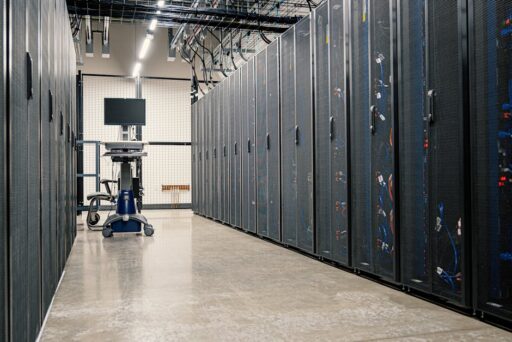

India AI Data Centers: Tax Incentives to Drive Cloud Growth
India’s latest federal budget introduces bold incentives aimed at turning the country into a global hub for artificial intelligence compute. The centerpiece is a long-term tax holiday on revenues generated by cloud services sold outside India, provided those services run from servers in Indian data centers. Paired with expanded electronics and semiconductor incentives, the package signals a strategic push to capture more of the AI value chain — from chips and servers to hyperscale cloud workloads.
How does the tax incentive work?
The incentive is structured to encourage foreign cloud providers and global enterprises to host cross-border AI workloads in India. Key features include:
- A tax holiday effectively reducing corporate tax on revenues from cloud services sold to foreign customers if the services are delivered from Indian data centers, extending through 2047.
- A requirement that sales to Indian customers be routed through locally incorporated resellers and taxed domestically.
- A proposed 15% cost-plus safe harbour for Indian data-center operators that provide services to related foreign entities, simplifying transfer pricing concerns.
These rules are designed to make India financially attractive for firms that operate global cloud platforms while preserving the government’s ability to tax domestic consumption and capture value from local reseller networks.
What do these incentives mean for global AI compute investment?
How will cloud providers respond?
Global cloud providers are already expanding capacity worldwide to keep pace with AI training and inference demand. A predictable, long-duration tax concession backed by supply-chain incentives positions India as an alternative to North America, Europe, and other Asian markets.
Potential commercial responses include:
- Accelerated build-out of hyperscale campuses and edge sites in India to capture cross-border workloads.
- Expansion of local partnerships, reseller networks, and transfer-pricing arrangements to comply with the reseller routing for domestic sales.
- Greater investment in localized services and training programs to develop talent for AI operations and cloud engineering.
These moves could reshape the global distribution of compute capacity and encourage multi-region deployment strategies for latency-sensitive and sovereign workloads.
Opportunities for India’s domestic data-center and electronics sectors
The budget is more than a cloud play — it aligns with a broader industrial strategy to deepen electronics and semiconductor manufacturing, strengthen supply chains, and develop critical-mineral processing. Notable measures include an expanded Electronics Components Manufacturing Scheme and a second phase of the national semiconductor mission aimed at producing equipment, materials, and intellectual property domestically.
For domestic players, the incentives create multiple opportunity paths:
- Grow hosting and colocation services that meet hyperscaler technical, security, and SLAs.
- Attract international suppliers of servers, storage, and power systems to set up manufacturing and tooling in India.
- Develop downstream industries such as data-center construction, cooling technologies, and renewable energy integrations to support large-scale compute.
Large private projects already under development — including gigawatt-scale campuses — underscore investor appetite. These projects can anchor local ecosystems and catalyze vendor, engineering, and operations hiring.
What challenges could limit scale-up?
Despite the attractive fiscal terms, execution risks remain. AI workloads are energy- and water-intensive, and India faces several structural constraints that could raise costs or slow deployment:
Power and energy economics
Unreliable grid availability, high industrial power tariffs in some states, and the need for resilient power (redundant feeds, on-site generation) increase capital and operating expenditures for data-center operators. Securing long-term affordable renewable energy offtake is essential for cost competitiveness.
Water scarcity and cooling
Traditional cooling systems consume large quantities of water. Data centers in water-stressed regions must invest in water-efficient cooling, air-side economization, or modular liquid-cooling approaches — adding complexity and upfront cost.
Land, clearances, and interstate variability
Access to large contiguous land parcels, state-level permissions, and reliable logistics are inconsistent across India’s states. Execution timelines may vary significantly by region depending on local policy, permitting efficiency, and infrastructure readiness.
How should investors and cloud operators evaluate the opportunity?
Decision-makers should weigh incentives against practical deployment and operating realities. A pragmatic evaluation framework includes:
- Regulatory certainty: Assess how the tax holiday will be implemented and whether transfer-pricing and reseller routing rules are clear and stable.
- Energy sourcing plans: Secure renewable energy supply agreements or plan on-site generation to manage operating margins and sustainability goals.
- Water and cooling strategy: Evaluate low-water cooling technologies and site selection in less water-stressed regions.
- Supply-chain and manufacturing incentives: Consider co-locating component production facilities to reduce logistics friction and exploit electronics scheme payouts.
- Local partnerships: Build relationships with domestic colocation firms, engineering contractors, and training providers to speed ramp-up.
Companies already active in India are likely to accelerate existing plans; newcomers must factor in time for permitting, grid connections, and workforce development.
Policy implications: balancing incentives, competition, and local industry
The tax holiday represents a strategic bet on attracting global Big Tech and cloud operators. While large foreign investments can catalyze local ecosystems and jobs, the design must also protect and nurture domestic firms. Some potential policy considerations:
- Ensure reseller routing rules do not unduly squeeze local resellers or leave smaller domestic players with thin margins.
- Tie certain incentives to measurable domestic outcomes such as local employment, supply-chain localization, and R&D activities.
- Coordinate federal incentives with state-level policies to reduce friction in land acquisition, power allocation, and environmental approvals.
Careful implementation will determine whether India captures long-term value — beyond just hosting compute — such as manufacturing equipment, developing semiconductor IP, and building a strong AI engineering base.
How will this intersect with India’s semiconductor and electronics push?
The cloud incentives are nested within a wider industrial calculus: increased funding for electronics component manufacturing, a new phase of the semiconductor mission, and targeted moves to secure critical minerals. Together, these measures aim to:
- Shift more of the global electronics and server value chain into India.
- Lower dependency on imports for key parts used in servers and data-center infrastructure.
- Promote localized R&D and higher-value manufacturing such as chip packaging and equipment production.
By aligning compute demand with manufacturing incentives, India seeks to create a virtuous cycle: hyperscalers stimulate local component production, which in turn reduces costs and time-to-deploy for new data centers.
What does success look like — and how long will it take?
Success will be multi-dimensional and measured over years, not months. Key indicators include:
- Acceleration in announced and completed hyperscale and AI-focused data-center projects.
- Growth in domestic electronics and server manufacturing capacity tied to data-center demand.
- Employment and skills development in cloud engineering, power management, and semiconductor roles.
- Stable policy execution with coordinated federal and state-level approvals.
If effectively implemented, the incentives could reposition India as a major node in the global AI compute map over the next decade. However, bridging the gap from policy announcement to operational scale requires sustained capital flows, infrastructure upgrades, and a focus on resilient, sustainable design.
Related reading from Artificial Intel News
For readers interested in how infrastructure and hardware trends interact with enterprise AI and sovereignty, see our analysis of on-device chips and developer infrastructure:
- On-Device AI Processors: Quadric’s Push for Sovereign AI
- AI App Infrastructure: Simplifying DevOps for Builders
- AI Funding Trends 2026: Mega-Rounds, Momentum, Outlook
Conclusion: a strategic moment for compute and supply chains
India’s budgetary incentives make an unequivocal statement: the country intends to compete for the next wave of AI infrastructure investment. The tax holiday for cross-border cloud revenues, combined with expanded electronics and semiconductor incentives, creates a layered opportunity for hyperscalers, domestic operators, and component manufacturers.
Yet the policy’s promise can be fully realized only if parallel investments address power reliability, water efficiency, land access, and supply-chain integration. Investors and operators should adopt a measured approach: capitalize on fiscal advantages, but plan for the operational complexity of building and running energy-intensive AI infrastructure in a fragmented regulatory environment.
Next steps for stakeholders
- Cloud providers: finalize energy and water-resilience plans, negotiate long-term offtakes, and structure compliant reseller arrangements for domestic sales.
- Domestic operators and suppliers: accelerate capabilities in advanced cooling, sustainable power integration, and semiconductor-adjacent manufacturing.
- Policymakers: ensure clarity on implementation, align state-federal processes, and include safeguards that help domestic firms scale alongside global partners.
India’s incentives mark a pivotal policy push with the potential to reshape global compute geographies. For companies evaluating entry or expansion, now is the time to model scenarios, secure partners, and lock in infrastructure that balances cost, sustainability, and long-term resilience.
Ready to dive deeper? Subscribe to Artificial Intel News for ongoing coverage of AI infrastructure, semiconductor policy, and cloud strategy. Stay informed and plan your next move in the rapidly evolving AI compute landscape.